

Where to Get Personalized Office Chair Recommendations from a Chiropractor
Ask Dr. Grant provides personalized office chair recommendations from a chiropractor's perspective, helping you match chair features to your body, desk, and daily habits. This guide covers how chiropractic ergonomic assessments work, how to translate those insights into a specific chair choice, and how to evaluate your broader workplace setup for long-term comfort.
Chiropractor Ergonomic Assessments
Chiropractor ergonomic assessments are structured evaluations of how your body interacts with your workspace equipment. Unlike generic online quizzes, these assessments consider your specific physical limitations, posture habits, and movement patterns. Dr. Grant Radermacher, a Doctor of Chiropractic and owner of Ascent Chiropractic in Brookfield, Wisconsin, uses this clinical background to guide product selection. His approach focuses on musculoskeletal health, ensuring that the equipment you choose supports your body rather than forcing it into an unnatural position.
The Clinical Perspective on Seating
Seating is a dynamic activity, not a static state. A chiropractor looks at how you transition between sitting, standing, and leaning. They assess whether your current setup encourages prolonged static postures, which can lead to stiffness and discomfort. The goal is to identify if your current chair is contributing to poor alignment or if the issue lies elsewhere in your workspace. This perspective helps distinguish between a chair that needs replacing and a workspace that needs adjusting.
Why Generic Advice Falls Short
Standard ergonomic advice often suggests a one-size-fits-all approach, such as keeping elbows at 90 degrees. While useful as a baseline, it ignores individual variations in limb length, torso proportions, and flexibility. A personalized assessment accounts for these differences. For example, a person with limited hip mobility may need a different seat depth than someone with full range of motion. Ask Dr. Grant emphasizes that fit is personal, and what works for one person may be a poor fit for another.
Personalized Chair Recommendations
Personalized chair recommendations are specific product suggestions tailored to your body, budget, and work environment. At Ask Dr. Grant, this process begins with understanding your priorities. Do you need independent pelvic support? Do you prefer a buoyant feel or a contouring hug? The platform uses these inputs to generate a focused shortlist of chairs that match your criteria. This method removes the noise of marketing claims and focuses on functional fit.
Key Adjustments to Prioritize
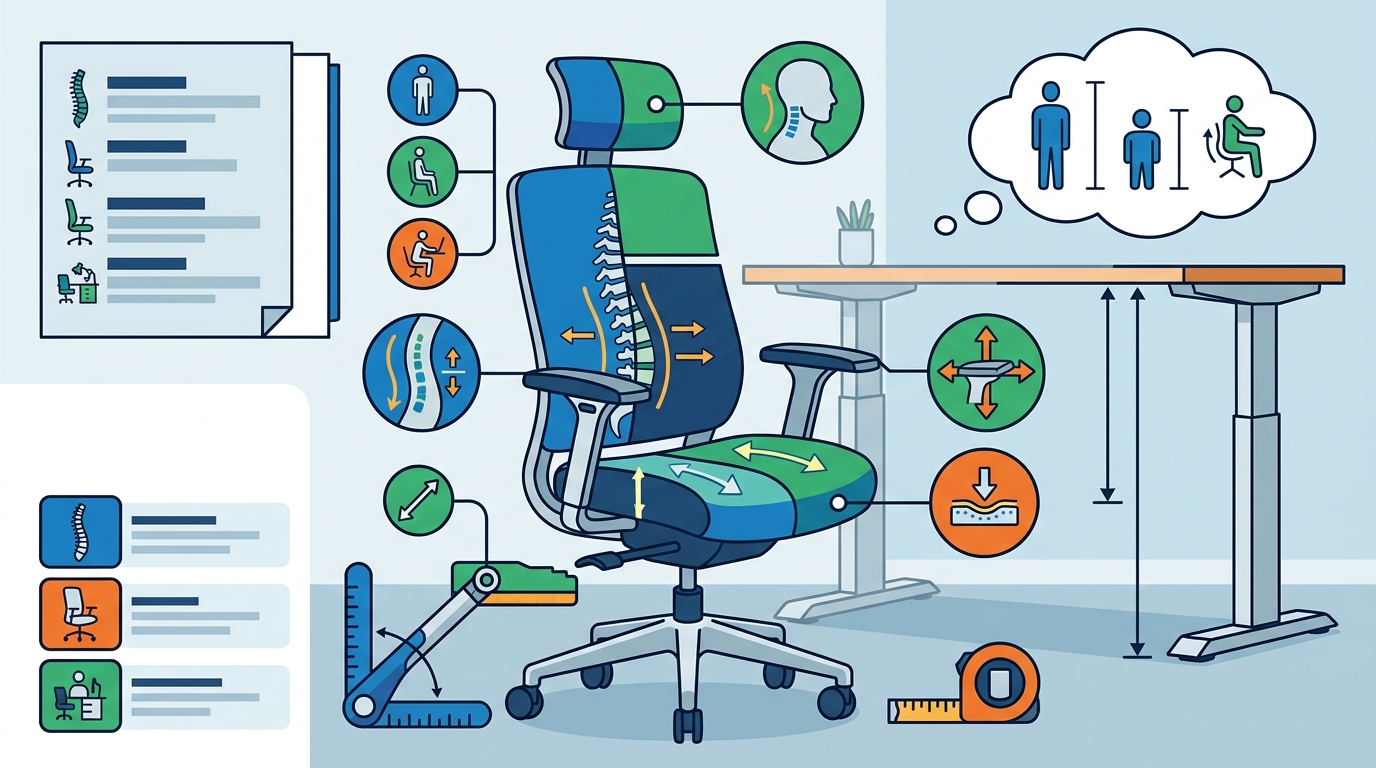
When evaluating chairs, certain adjustments matter more than others. Seat height and depth are foundational; they determine how your legs and lower back are supported. Arm support should allow your shoulders to relax, not force them up or down. Back support is critical, but the type of support matters. Some chairs offer fixed lumbar support, while others allow independent adjustment of the upper back and pelvis. The Anthros Chair is one option that centers its design on independently adjustable pelvic and upper-back support, which may suit users who prefer fine-tuning these areas separately.
Comparing Chair Options
Not all chairs are created equal, and premium pricing does not automatically mean a better fit. A costly chair is not automatically a better fit for your specific body. You must compare fit, configuration, current price, and return conditions against your budget and alternatives. The table below summarizes key considerations for different chair types.
| Chair Type | Key Feature | Best For | Tradeoff |
|---|---|---|---|
| Posture-Focused Chair | Independent pelvic and upper-back adjustments | Users who want fine-tuned support and an upright setup | Premium pricing; requires careful fit check |
Using the Ask Dr. Grant Tool
Workplace Ergonomic Evaluations
Workplace ergonomic evaluations are comprehensive reviews of your entire workstation, including the chair, desk, monitor, and keyboard. A chair is just one part of a larger system. If your desk is too high, no chair will fix the resulting shoulder strain. If your monitor is too low, neck pain may persist regardless of back support. OSHA provides practical guidance for fitting a chair, desk, monitor, and keyboard to the person using them, emphasizing that the setup must work together.
Adjusting What You Already Own
Before buying a new chair, start by adjusting your current setup. Ensure your feet are supported and your shoulders are relaxed. Bring the keyboard and mouse close enough that you are not reaching. If your feet do not reach the floor after setting the seat height, a stable footrest may help. These small adjustments can make a significant difference in comfort and may eliminate the need for a new purchase. The office chair fit guide details these steps, helping you determine if your current chair is the problem or if the workspace configuration is at fault.
The Role of Movement
Even a well-fitted chair is just one part of a workspace. Change position during the day and take breaks from continuous computer work. Standing desks and sit-stand options can help, but the goal is variety, not standing all day. A sit-stand desk is most useful when it makes changing position practical. Alternate between sitting, standing, and other tasks as comfortable. This dynamic approach reduces the risk of repetitive strain and keeps your body engaged.
When to Seek Professional Help
A product cannot establish the cause of a symptom. Persistent, unexplained, or worsening symptoms deserve an individual assessment from a qualified health professional. If you are experiencing pain that does not improve with ergonomic adjustments, consult a clinician. Ask Dr. Grant provides educational content and product-shopping guidance, but it is not medical advice, diagnosis, or treatment. For specific health concerns, reach out to a qualified provider for a personalized evaluation.
Key Takeaways
- Chiropractor ergonomic assessments focus on how your body interacts with your workspace, considering individual variations in posture and mobility.
- Personalized chair recommendations should prioritize fit, function, and budget over marketing labels or premium pricing.
- Key chair adjustments include seat height, seat depth, arm support, and back support, with independent adjustments offering more flexibility.
- Workplace ergonomic evaluations consider the entire workstation, including desk, monitor, and keyboard, as a system.
- Adjusting your current setup before buying a new chair can often resolve comfort issues without additional cost.
- Movement and position changes are essential for long-term comfort, regardless of chair quality.
- Persistent or worsening symptoms require a professional medical assessment, not just a product change.
- Ask Dr. Grant provides a structured way to compare chairs based on your specific needs and preferences.
Frequently Asked Questions
What is a chiropractor ergonomic assessment?
A chiropractor ergonomic assessment is a structured evaluation of how your body interacts with your workspace equipment, considering your specific physical limitations, posture habits, and movement patterns.
Can a chiropractor prescribe a specific office chair?
Chiropractors do not prescribe specific brands, but they can recommend features that support your body. Ask Dr. Grant helps translate these clinical insights into specific product options that match your needs.
Is a premium chair always better?
No. A costly chair is not automatically a better fit. You must compare fit, configuration, current price, and return conditions against your budget and alternatives to determine if the premium price is justified for your specific body.
How do I know if my current chair is the problem?
Start by adjusting your current setup. Ensure your feet are supported, your shoulders are relaxed, and your keyboard is close. If discomfort persists after these adjustments, the chair itself may be the issue, or you may need a broader workplace evaluation.
What is the difference between a chiropractor and a medical physician?
Dr. Grant Radermacher is a Doctor of Chiropractic (DC), not a medical physician. His practice focuses on chiropractic care and musculoskeletal health. For medical diagnoses or treatment, consult a qualified medical physician.
Does Ask Dr. Grant provide medical advice?
No. Ask Dr. Grant provides educational content and product-shopping guidance only. It is not medical advice, diagnosis, or treatment. AI answers are not a personal consultation or individually reviewed by Dr. Grant. Consult a qualified clinician about symptoms and suitability.
How can I get a personalized chair recommendation?
Use the Ask Dr. Grant assistant to input your preferences, budget, and specific needs. It will generate a focused shortlist of chairs that match your criteria, helping you compare options with confidence.
What should I look for in a posture-focused chair?
Look for independently adjustable pelvic and upper-back support, a seat cushion designed with pressure-relief cutouts, and a clear return policy. The Anthros Chair is one example of a posture-focused design with these features.