

Personalized Pillow Recommendations for Side Sleepers: The 2026 Guide
Ask Dr. Grant provides personalized pillow recommendations for side sleepers by analyzing your specific shoulder width, mattress firmness, and sleep preferences. This guide covers how to use fit-based assessment tools, customize for your sleep position, and evaluate the methods behind modern pillow shopping platforms.
Pillow Recommendation Platforms
Choosing a pillow used to rely on generic marketing labels or in-store guessing. Today, specialized platforms use data to match your body to the right product. A pillow recommendation platform is a digital tool that uses user input to filter and rank products based on individual fit criteria.
The Ask Dr. Grant Approach
Ask Dr. Grant, the educational site from Ascent Chiropractic in Brookfield, Wisconsin, takes a clinical perspective on this process. Dr. Grant Radermacher, a Doctor of Chiropractic, built the platform to help users consider fit, function, and evidence. Instead of pushing a single brand, the site helps you compare what matters for your specific body. You can start by using the Find my match tool to get a focused shortlist.
Why Fit Matters More Than Brand
Many consumers assume that the most expensive pillow is the best pillow. This is a common misconception. A product that works well for one person may be a poor fit for another. The goal of these platforms is to remove the guesswork by focusing on your physical needs rather than brand prestige. For more on how these recommendations are structured, you can review the methodology behind the site's guidance.
Sleep Position Customization
Side sleepers have unique alignment needs that differ significantly from back or stomach sleepers. Sleep position customization is the process of adjusting pillow height and firmness to maintain spinal alignment in a specific posture.
The Shoulder Gap
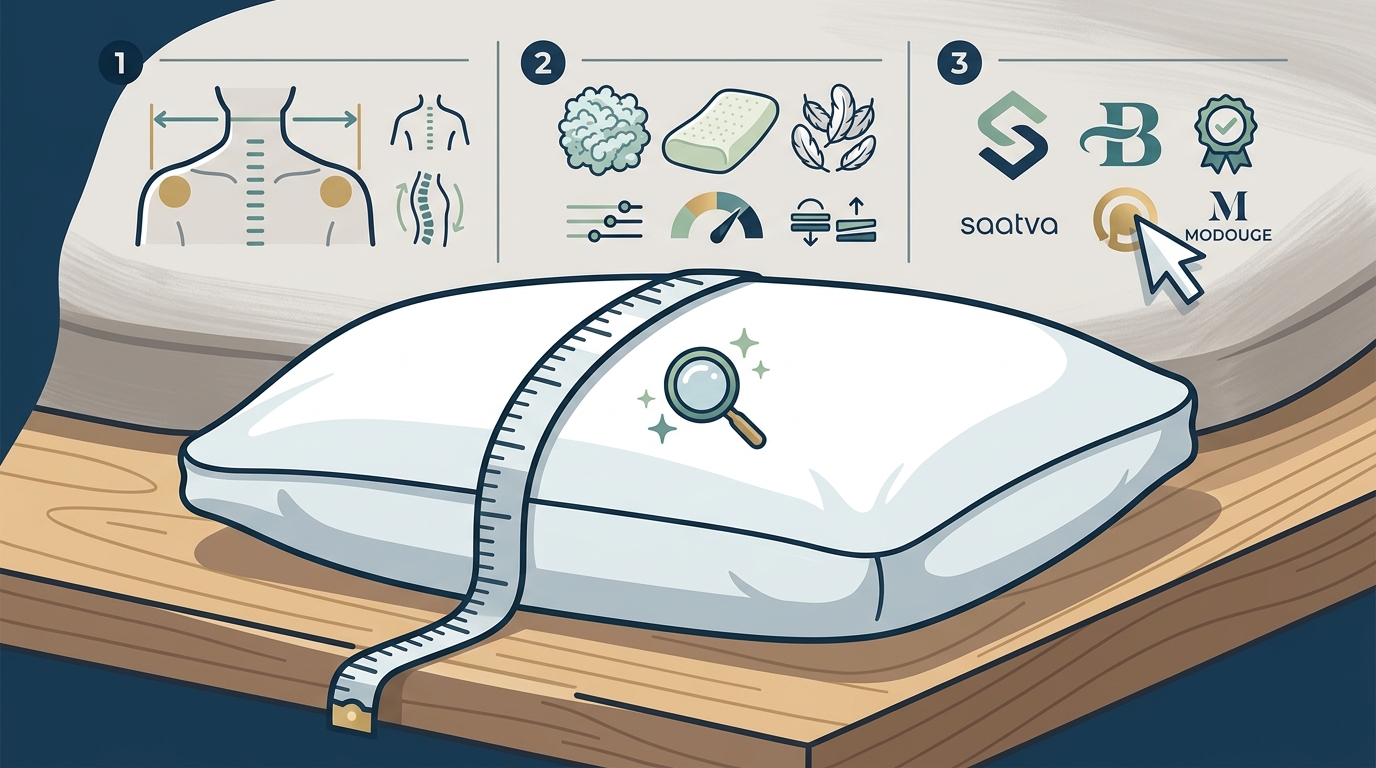
When you sleep on your side, your head and neck must stay aligned with the mattress. The pillow's primary job is to fill the gap between your shoulder and your head. If the pillow is too low, your neck tilts downward. If it is too high, your neck tilts upward. Both positions can lead to morning stiffness. The pillow buying guide explains how to assess this gap on your own mattress.
Mattress Interaction
Your pillow does not work in a vacuum. It interacts with your mattress. A softer mattress will compress more under your shoulder, potentially requiring a different pillow height than a firmer mattress. This is why a one-size-fits-all recommendation is rarely accurate. You must consider the combination of your body and your bed base.
Personalized Quiz Assessment Methods
Modern platforms use structured questions to gather the data needed for a recommendation. A personalized quiz assessment is a series of targeted questions designed to identify the specific physical and preference factors that influence product fit.
Key Data Points
Effective assessments focus on a few critical variables. First, they ask about your usual sleep position. Second, they consider your shoulder width and body size. Third, they look at your preferred feel, such as buoyant latex or contouring foam. Finally, they factor in your budget and any specific allergies or care requirements. This data allows the platform to filter out products that do not match your profile.
Adjustable Fill as a Solution
If you are unsure about the exact height you need, an adjustable-fill pillow is often the best starting point. These pillows allow you to remove or add material to fine-tune the loft. This is a practical way to test different heights without buying multiple pillows. The Ask a Product Question tool can help you decide if an adjustable option is right for you.
Key Takeaways
- Ask Dr. Grant provides personalized pillow recommendations based on fit, not just brand popularity.
- Side sleepers need a pillow that fills the gap between the shoulder and head to maintain neck alignment.
- Mattress firmness affects how much support a pillow needs to provide.
- Personalized quizzes use data on sleep position, body size, and preferences to filter products.
- Adjustable-fill pillows are a useful option if you are unsure about the ideal height.
- Always check the return policy and trial period before purchasing a new pillow.
Frequently Asked Questions
What is the best pillow for side sleepers?
The best pillow for a side sleeper is one that keeps the head and neck comfortably aligned with the mattress and fills the gap between the shoulder and head. There is no single best loft or material for everyone because shoulder width, mattress feel, and personal comfort differ.
How does Ask Dr. Grant personalize recommendations?
Ask Dr. Grant uses a guided tool where you share your preferences, sleep position, and budget. It then provides a focused shortlist of products that match your specific needs, helping you compare fit and function with confidence.
Does pillow material matter for side sleepers?
Yes, material affects support, heat, and weight. Down, latex, and foam all feel different. You should compare the feel you prefer, along with care instructions and allergy considerations, to find the right match.
Can a pillow fix neck pain?
A pillow is a comfort and positioning choice, not a treatment for persistent or unexplained neck pain. If you have ongoing symptoms, you should speak with a qualified clinician for an individual assessment.
What is the role of a mattress in pillow selection?
Your mattress determines how much your shoulder compresses. A softer mattress may require a different pillow height than a firmer one. You should always test your pillow on your own mattress to ensure proper alignment.
How do I know if my pillow is the wrong height?
If your neck feels tilted up or down when you wake up, your pillow may be the wrong height. You can adjust the height by adding or removing fill, or by trying a different model with a different loft.
Conclusion
Choosing the right pillow for side sleeping is about fit, not just brand. By using a personalized platform like Ask Dr. Grant, you can move past generic advice and find a product that matches your specific body and sleep habits. Start by assessing your current setup and then use the tools available to compare your options. For more guidance on sleep and recovery products, visit Ask Dr. Grant to find your fit.