

What to Look for in a Mattress From a Chiropractor's Perspective
From a chiropractor's perspective, you should look for a mattress that supports your natural spinal alignment in your preferred sleep position, offers adequate pressure relief, and matches your body weight. Dr. Grant Radermacher of Ascent Chiropractic emphasizes that there is no single "best" mattress for everyone. Instead, the right choice depends on your individual anatomy, sleep habits, and comfort preferences. This guide outlines the specific criteria to evaluate before making a purchase.
Spinal Alignment and Sleep Position
The primary goal of a mattress is to keep the spine in a neutral position while you sleep. A neutral spine means the head, neck, and back maintain their natural curves without excessive bending or twisting. If your spine is forced into an unnatural angle, it can lead to morning stiffness or pain. Your sleep position dictates the type of support you need.
Consider the gap between your shoulder and the mattress when lying on your side. If there is a significant gap, the mattress may be too firm. If your hips sink so far that your spine curves, it may be too soft. This simple check helps identify the right firmness level for your body type.
Firmness Versus Support
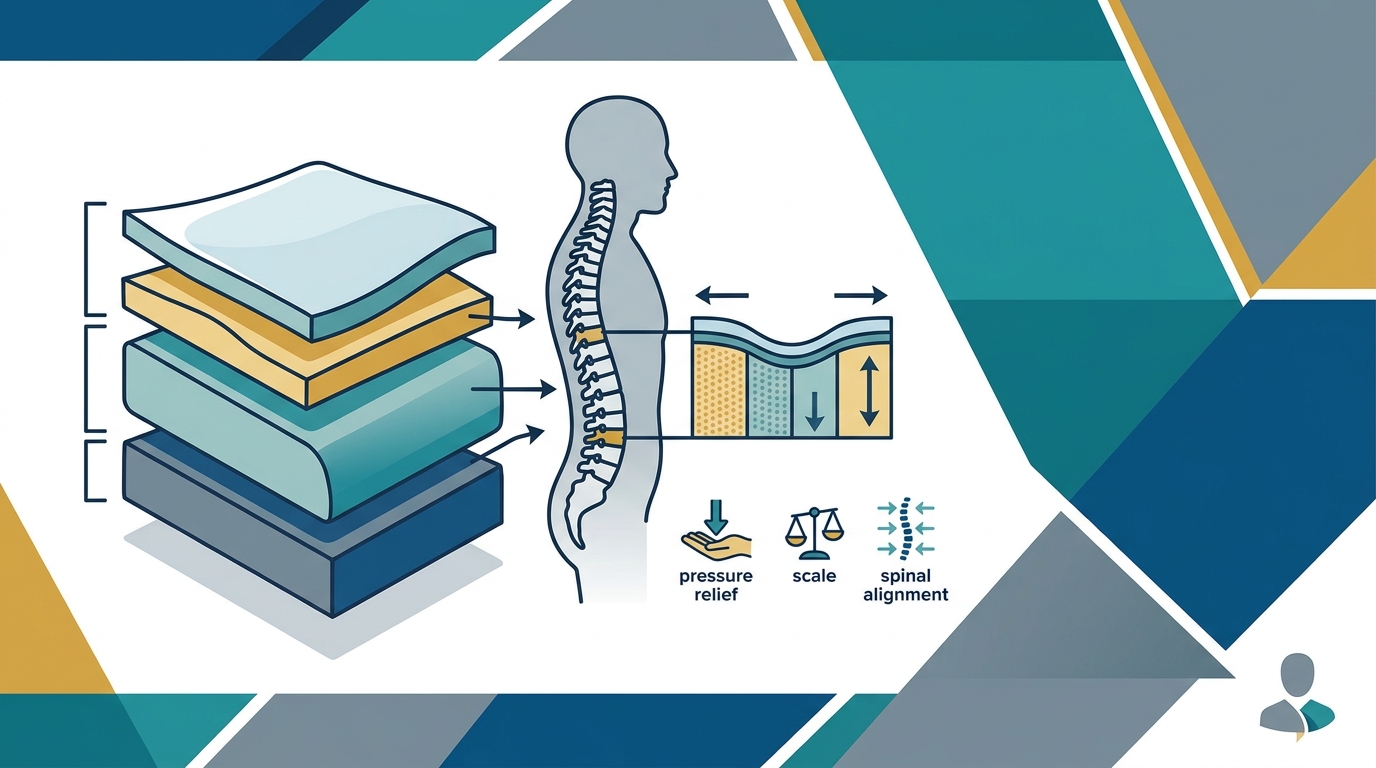
Firmness and support are often confused, but they are distinct concepts. Firmness refers to how hard the surface feels to the touch. Support refers to how well the mattress holds your body weight and maintains spinal alignment. A mattress can feel firm but provide poor support if it does not contour to your body. Conversely, a soft mattress can provide excellent support if it has a strong base layer.
Research suggests that medium-firm mattresses often provide the best balance for many people. A study published in the Journal of the American Chiropractic Association found that medium-firm mattresses were associated with reduced pain and disability in patients with chronic low back pain. However, this does not mean medium-firm is right for everyone. Your body weight plays a crucial role. Heavier individuals may need a firmer feel to prevent sinking too deeply, while lighter individuals may prefer a softer surface for pressure relief.
When evaluating a mattress, look for a design that offers both comfort and support. A top layer of softer material can provide pressure relief, while a denser base layer ensures the spine remains aligned. This layered approach is common in hybrid and latex mattresses.
Pressure Relief and Material Choice
Pressure relief is the ability of a mattress to distribute your body weight evenly. High-pressure points, such as the shoulders and hips, can restrict blood flow and cause discomfort. Materials like memory foam and latex are known for their pressure-relieving properties. Memory foam contours closely to the body, while latex offers a more buoyant feel.
Latex is a natural material that is responsive and durable. It provides a bouncy feel that makes it easier to change positions during the night. Memory foam is softer and conforms more closely, which can be beneficial for those with joint pain. However, memory foam can retain heat, which may be a concern for hot sleepers. Latex is generally cooler and more breathable.
Consider your sensitivity to heat and your preference for feel. If you tend to sleep hot, look for materials with cooling properties, such as gel-infused foam or latex with airflow channels. If you prefer a responsive feel, latex or innerspring hybrids may be a better fit. Dr. Grant notes that material choice is a matter of personal preference, but it should align with your comfort needs.
Durability and Motion Isolation
Motion isolation is the ability of a mattress to absorb movement so that it does not transfer to the other side of the bed. This is important for couples who share a bed. Memory foam and latex excel at motion isolation because they absorb movement locally. Innerspring mattresses tend to transfer motion more easily, which can disturb a light sleeper. If you share your bed with a partner, consider how their movement might affect your sleep.
Check the warranty and trial period offered by the manufacturer. A longer trial period allows you to test the mattress in your home environment. A comprehensive warranty protects your investment against defects. Read the fine print to understand what is covered and any conditions for returns.
Key Takeaways
- Choose a mattress that supports spinal alignment in your preferred sleep position.
- Medium-firm mattresses are often a good starting point, but individual needs vary.
- Pressure relief is essential for reducing discomfort in high-pressure areas.
- Material choice affects feel, temperature, and motion isolation.
- Durability and warranty terms are important for long-term value.
- Test the mattress in your actual sleeping position before buying.
Frequently Asked Questions
Is a firmer mattress always better for back pain?
No, a firmer mattress is not always better. The right firmness depends on your body weight and sleep position. A mattress that is too firm can create pressure points, while one that is too soft can cause the spine to sink. Medium-firm is often a good balance for many people.
How long should I try a mattress before deciding?
Most manufacturers offer a trial period of 30 to 100 nights. It can take several weeks for your body to adjust to a new mattress. Use the full trial period to determine if the mattress works for you.
Do I need a special foundation for my mattress?
Some mattresses require a specific type of foundation, such as an adjustable base or a solid platform. Check the manufacturer's recommendations to ensure proper support and warranty coverage.
Can a mattress cure back pain?
A mattress can help reduce discomfort by supporting spinal alignment, but it is not a cure for back pain. If you have persistent or worsening pain, consult a healthcare professional for a proper diagnosis and treatment plan.
What is the difference between latex and memory foam?
Latex is a natural material that is responsive and bouncy. Memory foam is a synthetic material that contours closely to the body. Latex is generally cooler and more durable, while memory foam offers better pressure relief and motion isolation.